
Have you ever gazed up at the Moon and wondered what it would be like to travel there? For the first time in more than half a century, humans are about to venture back towards our celestial neighbour. The Artemis II mission represents a monumental leap forward in space exploration: and it's happening right now. NASA is preparing to launch the first crewed Moon mission since Apollo 17 returned to Earth in December 1972, and the excitement is absolutely electric.
When Does the Artemis II Mission Launch?
The countdown has truly begun. NASA is targeting Friday, 6 February 2026 as the earliest possible launch date for Artemis II. However, space launches depend on far more than just having the rocket ready. The Moon itself needs to be in precisely the right position, which means launch opportunities come in specific windows.
Consequently, if the February date slips, there are additional opportunities throughout the spring. The potential launch windows include:
- February: 6, 7, 8, 10, and 11
- March: 6, 7, 8, 9, and 11
- April: 1, 3, 4, 5, and 6
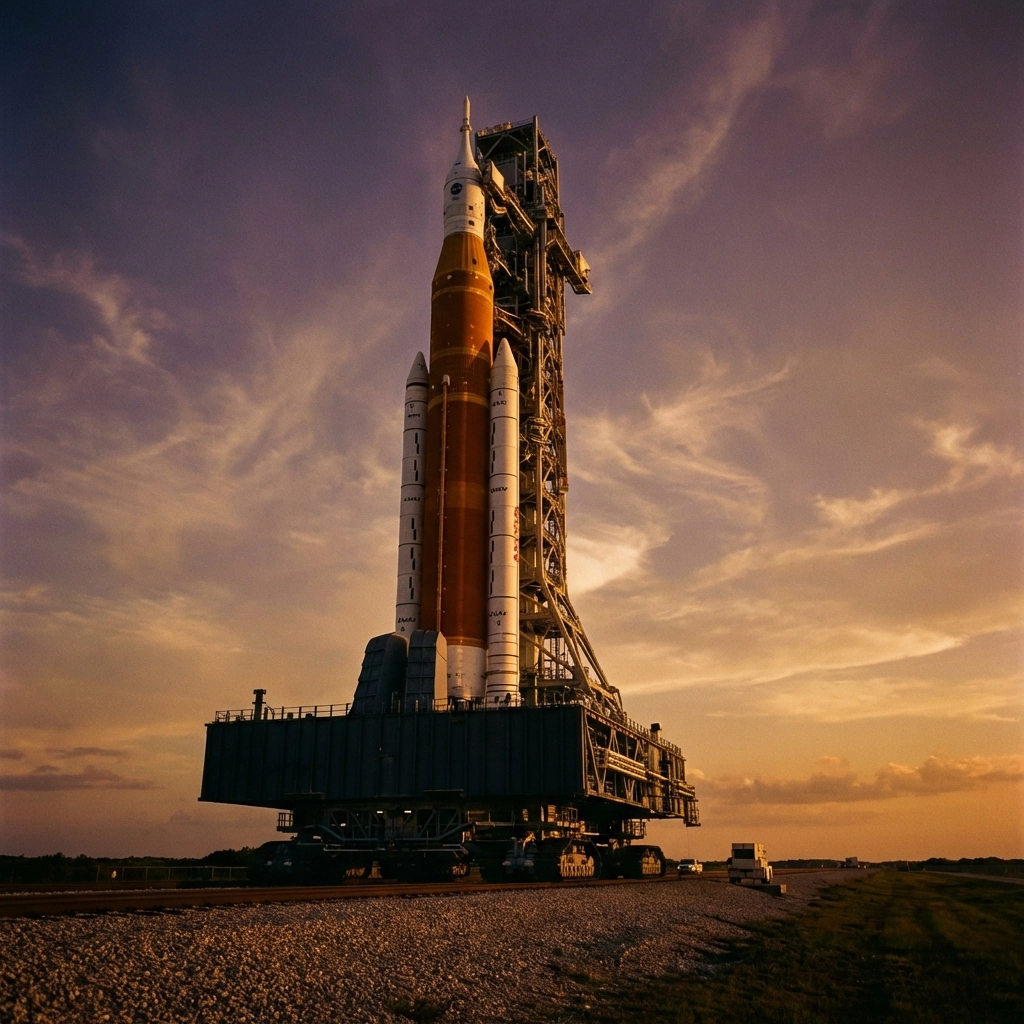
On Saturday 18 January 2026, NASA plans to roll out its gigantic Space Launch System (SLS) rocket and Orion spacecraft from the Vehicle Assembly Building to the launch pad. This four-mile journey aboard the crawler-transporter-2 will take up to 12 hours: a slow but essential process for the 98-metre rocket.
Following this, engineers will conduct a "wet dress rehearsal" at the end of January. This critical test involves loading more than 700,000 gallons of cryogenic propellants into the rocket and running through the entire launch countdown sequence. If everything goes smoothly, the mission will be cleared for its historic launch.
Meet the Artemis II Crew: Four Pioneers Making History
Every great adventure needs exceptional explorers. The Artemis II crew comprises four remarkable astronauts who will venture further into space than any human has ever travelled before.
Reid Wiseman serves as mission commander. As a former Navy pilot and NASA astronaut, he brings invaluable experience to lead this historic expedition. Victor Glover takes the pilot's seat, bringing his expertise from previous missions aboard the International Space Station. Christina Koch joins as mission specialist: notably becoming the first woman to travel beyond low Earth orbit. Finally, Jeremy Hansen of the Canadian Space Agency rounds out the crew as the first Canadian astronaut assigned to a lunar mission.
Together, this diverse team represents not just American ambition but international cooperation in humanity's return to deep space. Their mission will last approximately 10 days, during which they'll travel more than 230,000 miles from Earth.
What Will the Artemis II Crew Actually Do?
Unlike the Apollo missions that captured the world's imagination, Artemis II won't land on the lunar surface. Instead, this mission serves as a crucial proving ground for the technology that will eventually return humans to the Moon.
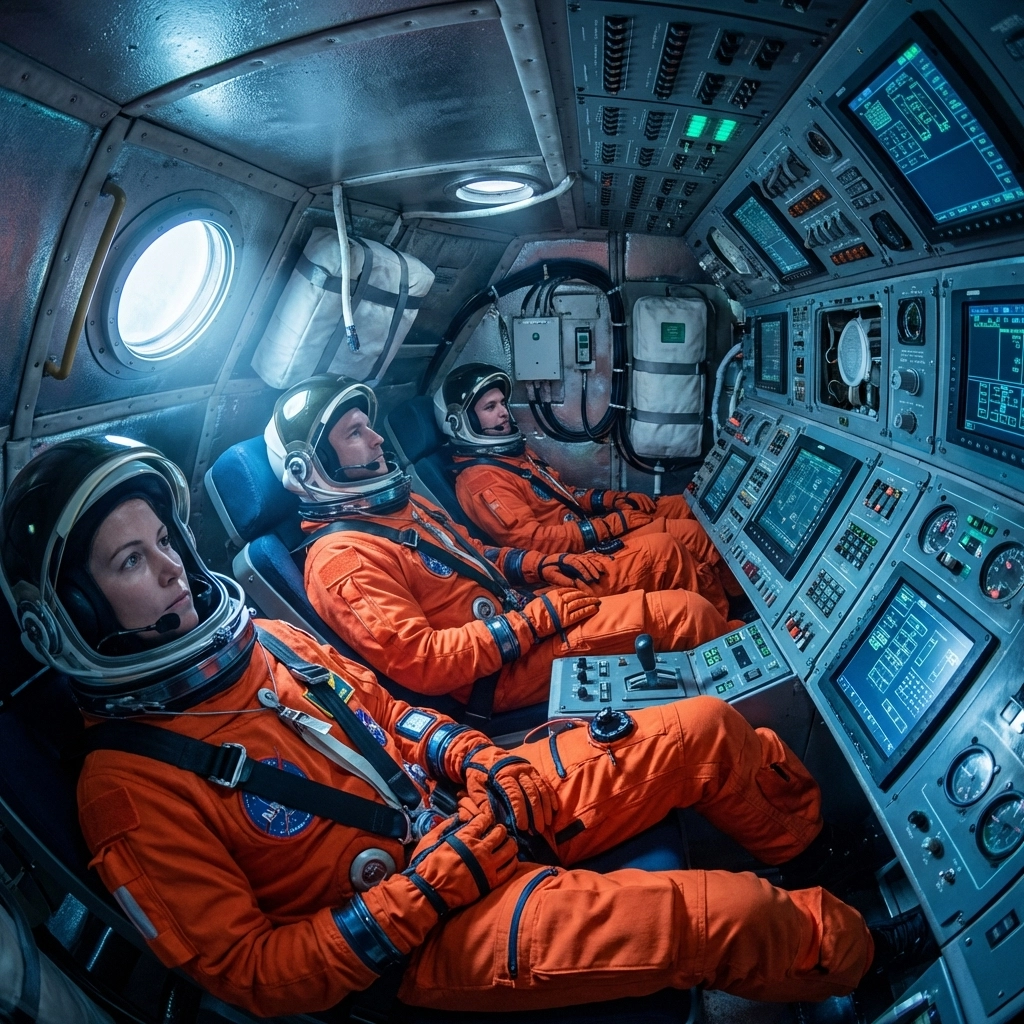
The crew will test Orion's life-support, propulsion, power, and navigation systems in the harsh environment of deep space. Moreover, they'll manually fly the capsule in Earth orbit to practise steering and alignment techniques essential for future Moon landings. These hands-on tests simply cannot be replicated by uncrewed missions.
Additionally, the astronauts will serve as medical test subjects, sending vital data and imagery back to Earth. They'll work in a remarkably compact cabin: roughly nine cubic metres of living space: while experiencing weightlessness. Radiation levels will be higher than on the International Space Station, but still within safe limits.
The Journey: A Figure-Eight Around the Moon
The Artemis II trajectory is nothing short of spectacular. After lifting off from Kennedy Space Center, the crew will first orbit Earth before the rocket separation occurs. Then, the main engine fires to propel Orion towards the Moon.
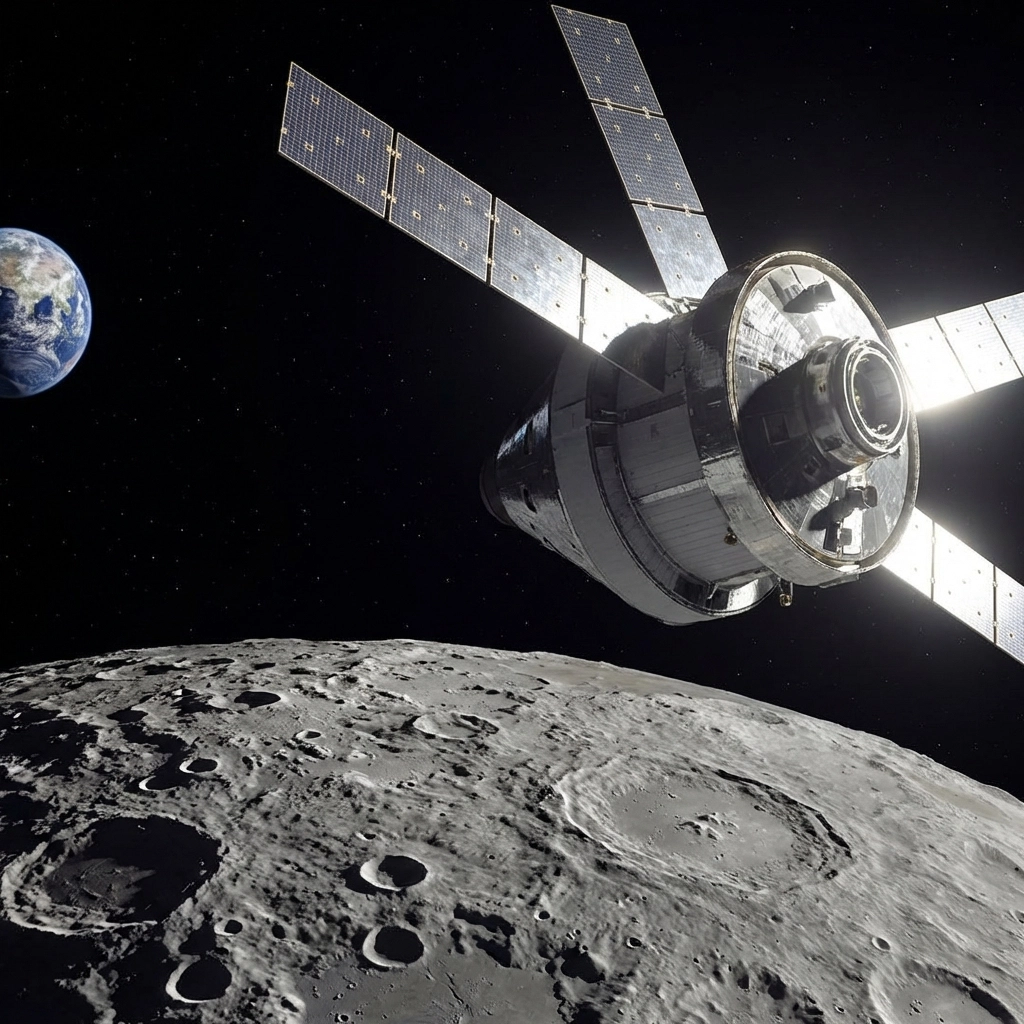
The spacecraft will swing around the far side of the Moon in a lunar flyby, using the Moon's gravity to guide it back towards Earth. This fuel-efficient "free-return trajectory" represents an elegant solution to deep-space navigation.
As a result, the crew will venture to a point thousands of kilometres beyond the Moon: further than any human has ever travelled. The psychological impact of seeing Earth as a tiny blue marble from such an immense distance will undoubtedly be profound. Understanding how astronauts cope with such experiences is crucial for future long-duration missions, as explored in discussions about the psychological challenges of extended space travel.
The mission concludes with a high-speed atmospheric re-entry and splashdown in the Pacific Ocean, off the coast of San Diego.
Setting the Stage for Artemis III and Beyond
Artemis II builds directly upon the success of Artemis I, the uncrewed test flight completed in 2022. Therefore, it represents the essential middle step before humans actually set foot on the lunar surface again.
NASA confirms that Artemis III will launch "no earlier than" 2027, though many experts believe 2028 is more realistic. That mission will target the Moon's south pole: a region never before explored by humans. The final spacecraft selection for the lunar descent hasn't been made yet, with both SpaceX's Starship and Blue Origin's lunar lander still in contention.
Furthermore, the Artemis programme extends far beyond single missions. Artemis IV and V will begin constructing Gateway, a small space station orbiting the Moon. This will enable sustained human presence on and around our lunar neighbour, with longer stays, robotic rovers, and international collaboration.
The Global Lunar Race: Who Else Is Heading to the Moon?
America isn't alone in its lunar ambitions. The 2030s promise to be an extraordinary decade for Moon exploration.
European astronauts have secured seats on later Artemis missions, while Japan has also joined the programme. Meanwhile, China is independently developing spacecraft targeting a first crewed landing near the Moon's south pole by 2030. India, following the successful Chandrayaan-3 landing in August 2023, has set ambitious goals for astronauts on the Moon by approximately 2040.
Russia continues discussing lunar aspirations, though funding pressures and technical challenges make their timeline uncertain. Nevertheless, the renewed international interest in lunar exploration signals something remarkable: humanity is genuinely returning to the Moon, and this time, we're planning to stay.
What This Means for the Future of Space Travel
Here's where things get truly exciting for anyone who's ever dreamed of travelling to space themselves. The Artemis programme isn't just about flags and footprints: it's about building the infrastructure for sustainable human presence beyond Earth.
Every system tested on Artemis II, every lesson learned, contributes to making space travel safer and more accessible. The commercial partnerships driving this new era of exploration are the same ones developing opportunities for private citizens to experience space.
The distinction between professional astronauts and civilian space travellers continues to blur. Missions like the first all-British space crew demonstrate how space is opening up to people from all backgrounds and nationalities.
As we watch Artemis II lift off in February 2026, we're witnessing more than a historical milestone. We're seeing the foundation being laid for a future where holidays in space become reality: where the adventure of a lifetime might be closer than you ever imagined.
The Moon is calling. And humanity is finally answering.
Categories: Space Exploration, NASA Missions, Future of Space Travel
Tags: Artemis II, NASA Moon Mission, Lunar Exploration, Orion Spacecraft, Space Tourism Future
SEO Keyphrase: Artemis II mission
Meta Title: Artemis II Mission: NASA's First Crewed Moon Flight in 50 Years | RocketBreaks
Meta Description: Discover everything about the Artemis II mission launching February 2026: meet the crew, explore the timeline, and see how this historic Moon flight shapes space travel's future.