
Britain’s Space Clean-Up Mission: A New Chapter for SaxaVord
The UK space clean-up mission brings together a spacecraft with robotic claws, two retired satellites and a planned launch from the northernmost reaches of Britain. It sounds like the beginning of a science-fiction film, but it has a practical purpose: helping to clean up Earth’s orbit.
Announced on 15 October 2026, the UK Active Debris Removal mission is planned to launch from SaxaVord Spaceport in Shetland in 2029. For anyone following the growth of Britain’s space industry, it is another mission worth watching.
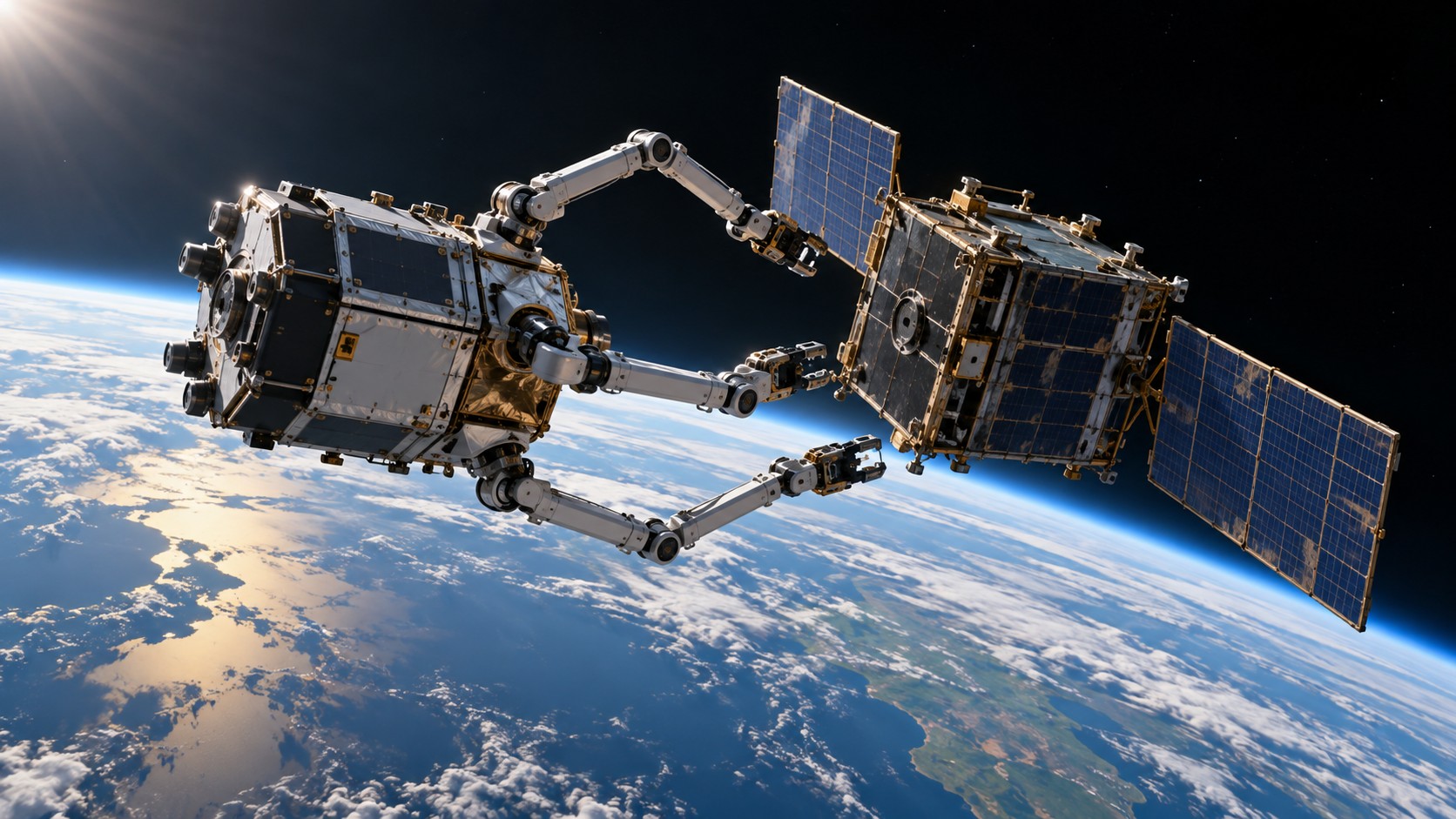
What will the UK space clean-up mission do?
ClearSpace UK has been selected to deliver the mission under a £61 million contract with the UK Space Agency.
The spacecraft will approach and capture two defunct UK-registered satellites. It will then guide them towards lower orbits so they can eventually burn up in Earth’s atmosphere. These satellites were never designed to be caught, making the task a demanding test of precision engineering.
ClearSpace says the mission will demonstrate technologies that could also support future spacecraft servicing. Its current target is 2029, subject to final mission and launch scheduling. The Government’s announcement sets out an aim to remove the two satellites by 2032.
Why does space debris matter?
The satellites above us support weather forecasts, navigation and communications. Yet they share their orbital environment with old spacecraft and fragments of previous missions.
Objects moving at orbital speeds can cause serious damage if they collide. Removing retired satellites is one way to reduce future risks. At the same time, it develops the skills needed to look after spacecraft already in orbit.
The UK space clean-up mission’s refuellable design also looks beyond a single operation, with the intention of supporting further work in the future.
For us at RocketBreaks, this is an important part of the wider space-travel story. Exploring beyond Earth brings responsibility for the environment we are entering.
What could this mean for UK launch tourism?
SaxaVord’s involvement gives space enthusiasts another reason to follow developments in Shetland.
Our view is that a distinctive mission like this could build interest in watching launches from the UK. There is a compelling story behind the spectacle: a British spacecraft setting off to tackle a problem far above our heads.
However, a planned mission is only one part of arranging a launch-viewing trip. The announcement does not provide a bookable launch date or public viewing allocation. Any future travel plans would need confirmed access arrangements and flexibility around launch schedules.
At RocketBreaks, we will be following the programme as those details develop. You can also explore our latest space news for more stories about missions and extraordinary experiences.
Could you name the UK space clean-up mission?
You do not have to wait until 2029 to get involved.
The UK Space Agency has opened a public competition to name the mission, with entries closing at 5pm GMT on 10 December 2026.
The competition is open to UK residents. Entrants can suggest a name of up to two words, or an acronym, alongside an explanation of no more than 150 words. Schools can enter together, while entries from under-18s must be submitted by a parent or teacher. Full eligibility and naming rules apply.
Explore the official naming competition.
What would you call a spacecraft whose job is to give Earth’s orbit a much-needed tidy-up?
Curious about a future space experience? Contact RocketBreaks to discuss the possibilities and the latest confirmed availability.
Sources: UK Government announcement and ClearSpace mission confirmation, both 15 October 2026.