
SpaceX catches Starship after orbit for the first time
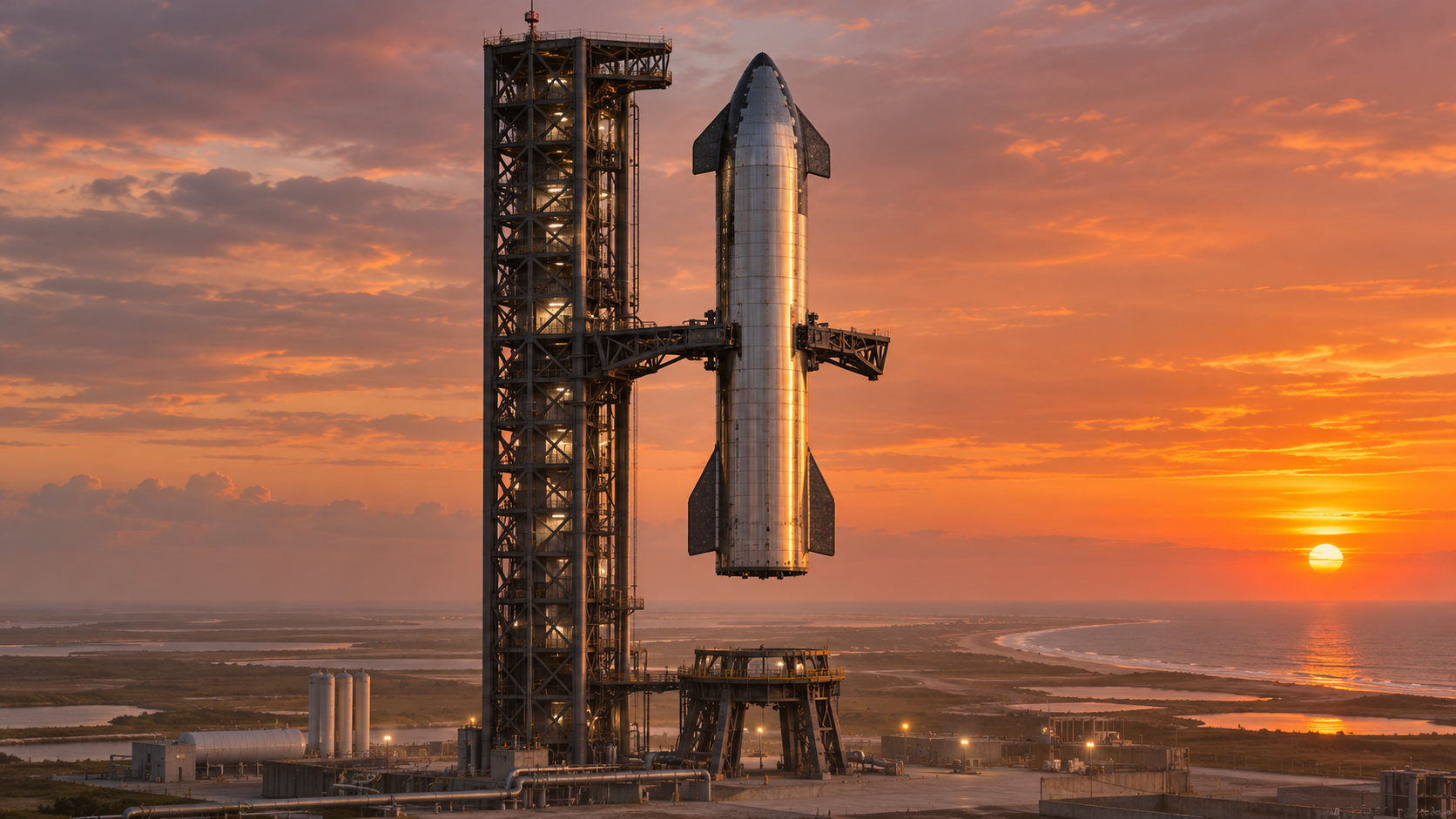
The first Starship tower catch after an orbital flight took place at Starbase, Texas, on 14 November 2026. SpaceX recovered its Starship spacecraft with the arms of a launch tower after the vehicle returned from orbit. The mission was uncrewed.
What happened on Starship Flight 15?
Flight 15 began on 13 November. The plan called for both parts of the rocket to return to the launch site: the Super Heavy booster after liftoff and the Starship spacecraft after its time in orbit. SpaceX’s flight plan called for about 14 orbits of Earth.
Associated Press reported on 14 November that the booster exploded after liftoff. Starship continued its mission and returned roughly 22 hours after launch. As it descended upright beside the tower, two mechanical arms took its weight above the pad. The planned double catch did not happen.
Did Starship dock with the space station?
No. What looked like docking was a tower catch back on Earth. The tower held the spacecraft in mid-air at the launch site. It did not join up with the International Space Station or another vehicle in orbit.
Why does the Starship tower catch matter?
SpaceX has caught Super Heavy boosters before. Recovering the upper stage after an orbital flight is another step towards reusing both parts of the system. A successful catch lets engineers inspect a spacecraft that has been through re-entry and see what needs work before it could fly again.
The next question is how reliably SpaceX can repeat that sequence and how much inspection and refurbishment each flight will require. One recovery alone does not establish a turnaround time or the cost of flying again.
What does this mean for space travellers?
Flight 15 was a test. There was no announcement of passenger seats, prices or travel dates. For now, the story is about what could make flights more repeatable in the future. We’ll be watching for another upper-stage catch, a successful recovery of both stages on one mission and, eventually, a recovered spacecraft flying again.
Interested in the different ways people can experience space today? Explore RocketBreaks’ space travel experiences.