
Have you ever wondered if Santa's sleigh might show up on one of those incredible deep-space images we see from NASA? With Christmas in space becoming a more fascinating topic each year, it's natural to imagine our favorite jolly gift-giver zipping past distant galaxies on Christmas Eve. While the James Webb Space Telescope hasn't actually captured Santa making his rounds (yet!), the universe has been serving up some seriously festive cosmic treats that might just make you believe in Christmas magic all over again.
What Space Telescopes Actually Found This Holiday Season
Let's start with the facts before we dive into the fun speculation. NASA's space observatories have been absolutely spoiling us with holiday-themed images that are almost too perfect to be coincidental.
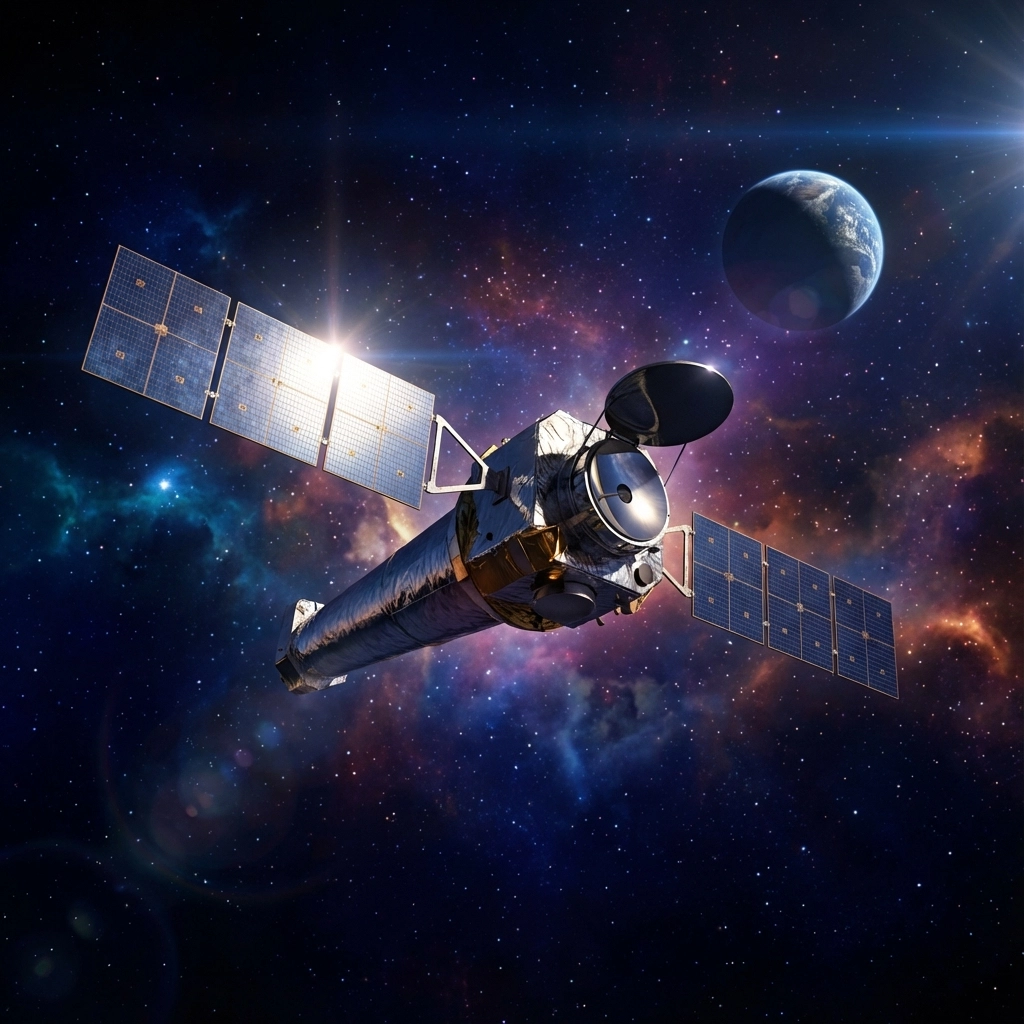
The Chandra X-ray Observatory recently released what can only be described as the ultimate cosmic Christmas card. They've spotted four incredible celestial objects that look like they were designed by Santa's workshop:
NGC 4782 and NGC 4783 are two colliding galaxies that perfectly resemble a snowman when viewed from our perspective. These cosmic giants are separated by about 170 million light-years, with a bridge of hot gas connecting them that looks remarkably like a winter scarf. Talk about Christmas in space!
NGC 2264, nicknamed the "Christmas Tree Nebula," shows baby stars twinkling like high-energy Christmas baubles in X-ray light. If Santa were looking for a pit stop to refuel his sleigh, this stellar nursery would make the perfect festive backdrop.
Meanwhile, the James Webb Space Telescope's final Picture of the Month for 2025 featured Westerlund 2, a star cluster that looks absolutely festive with its glowing clouds of gas and thousands of sparkling stars. Located 20,000 light-years away in the constellation Carina, it's like nature's own Christmas light display on a galactic scale.
Could Santa Actually Be Detected in Space?
Now here's where things get interesting. If Santa were really making his Christmas Eve journey through space, would our most advanced telescopes be able to spot him?

The James Webb Space Telescope is incredibly powerful – it can detect the faintest infrared light from objects billions of light-years away. However, Santa's sleigh would present some unique detection challenges. First, he'd need to be traveling at absolutely mind-boggling speeds to visit every house on Earth in one night. We're talking faster-than-light travel, which would put him well beyond our current understanding of physics.
But let's imagine for a moment that Santa operates using some advanced alien technology (which would explain a lot, wouldn't it?). His sleigh would likely emit some form of energy signature – perhaps from Rudolph's famous glowing nose, or from whatever propulsion system allows nine reindeer to achieve interplanetary speeds.
The infrared signature from such a craft might actually be detectable by Webb's sensitive instruments. After all, the telescope was designed to spot the heat signatures of distant exoplanets and forming stars. A sleigh traveling at relativistic speeds would certainly generate some interesting thermal emissions!
Space Tourism and Holiday Adventures
Speaking of Christmas in space, the growing space tourism industry is opening up incredible possibilities for future holiday celebrations beyond Earth's atmosphere. Companies are already planning luxury space holidays that could one day include Christmas experiences in zero gravity.
Imagine celebrating Christmas aboard a space station, watching Earth rotate below while exchanging gifts in weightlessness. The International Space Station has hosted multiple Christmas celebrations over the years, with astronauts creating their own festive traditions in microgravity. These pioneering space dwellers have shown us that the holiday spirit translates beautifully to the cosmic frontier.
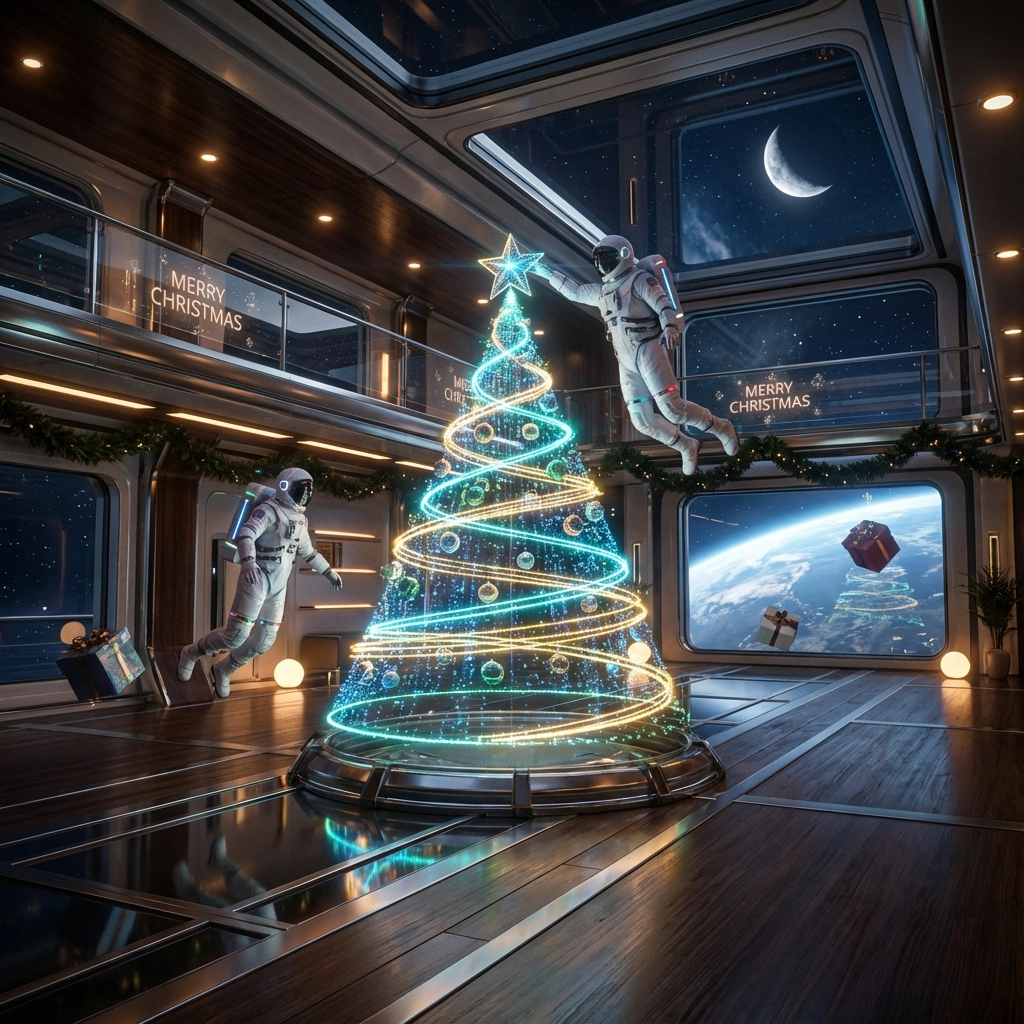
The connection between space exploration and holiday wonder isn't just imagination – it's becoming reality. As we've seen from Tim Peake's groundbreaking missions, ordinary people are increasingly accessing extraordinary space experiences.
The Science Behind Spotting Objects in Deep Space
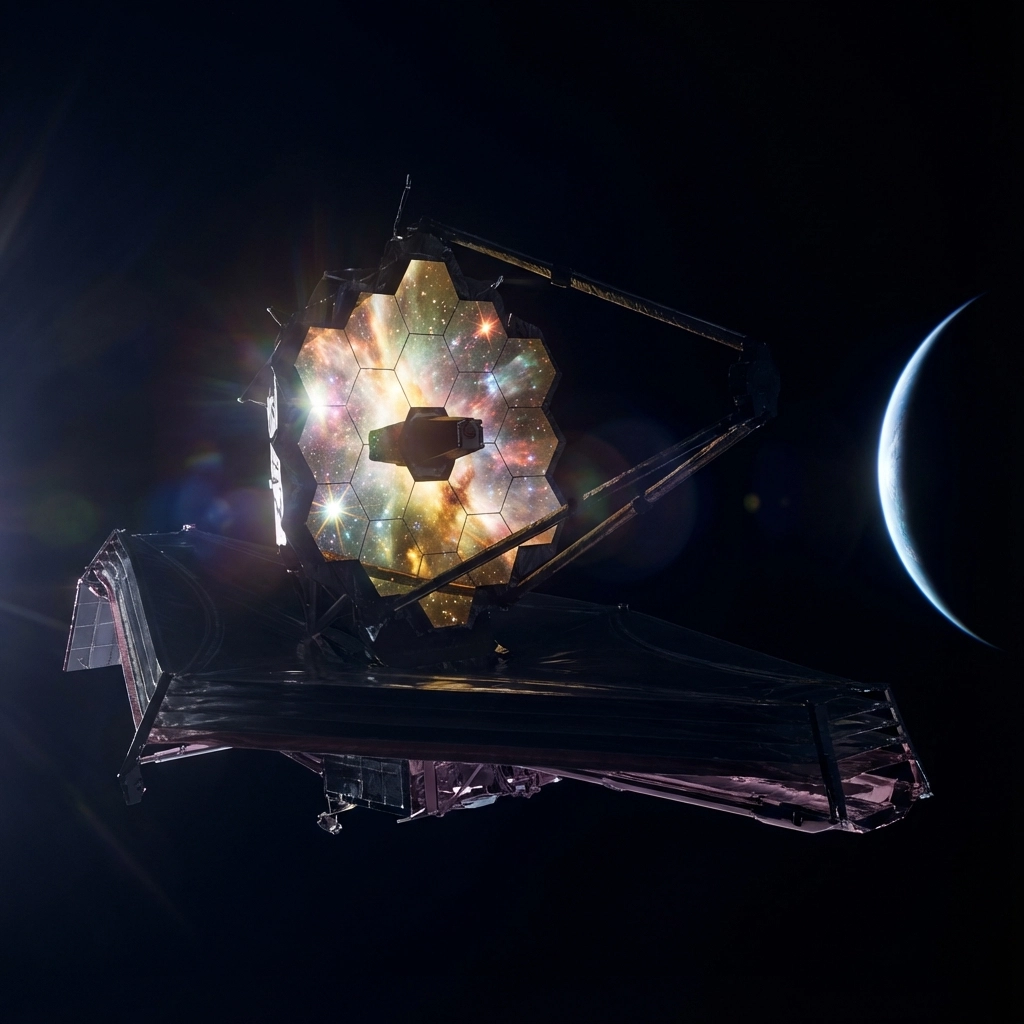
To understand whether we could theoretically spot Santa's sleigh, it helps to know how space telescopes actually work their magic. The James Webb Space Telescope uses a massive 6.5-meter primary mirror that collects infrared light from across the universe.
The telescope's incredible sensitivity comes from its position at Lagrange Point 2, about 1.5 million kilometers from Earth, where it's shielded from our planet's heat and light. This allows it to detect incredibly faint signals from the most distant corners of space.
However, detecting fast-moving objects in our own solar system presents different challenges than spotting distant galaxies. Objects moving at high speeds relative to the telescope appear as streaks rather than point sources, making them harder to identify and track.
Real Christmas Celebrations in Space
While we're having fun imagining Santa's cosmic journey, real astronauts have been celebrating Christmas in space for decades. The Apollo 8 mission famously orbited the Moon on Christmas Eve 1968, with the crew reading from the Book of Genesis while broadcasting images of Earth rising over the lunar horizon.
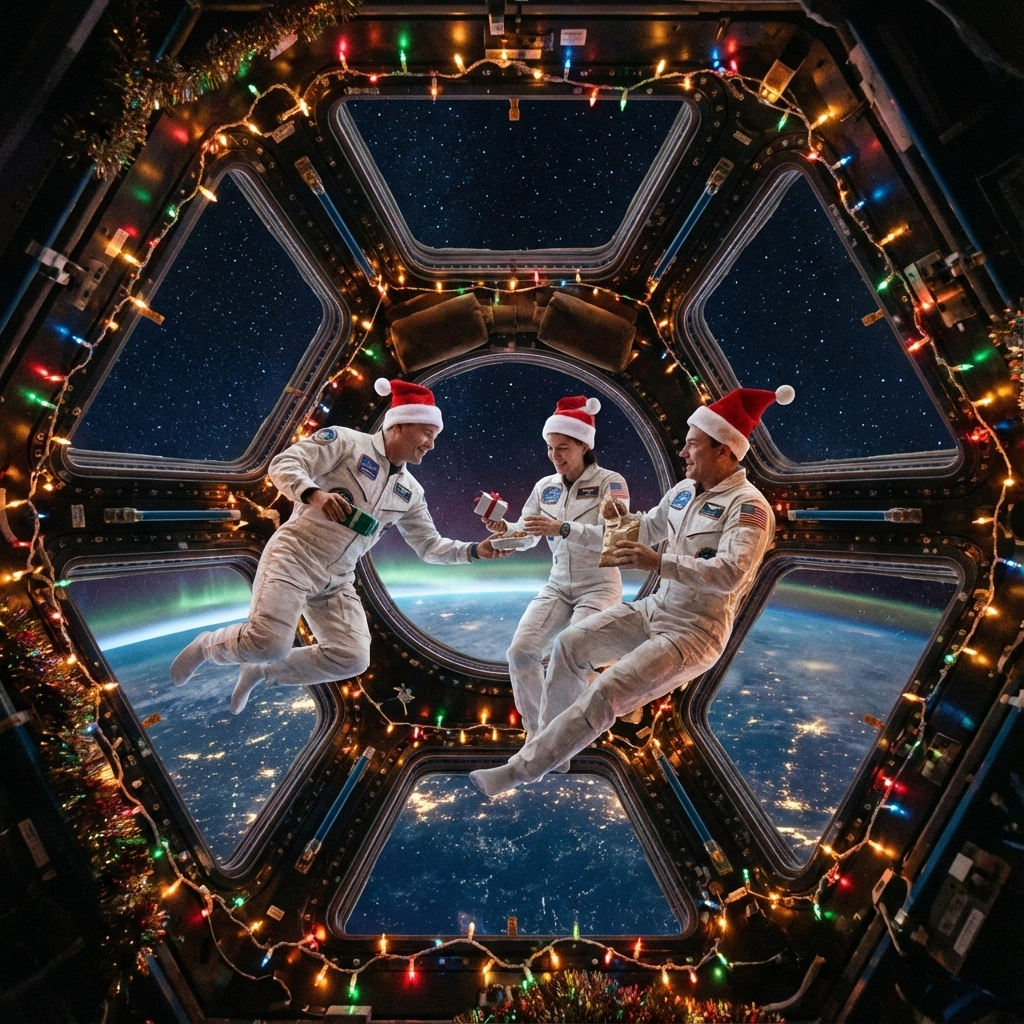
More recently, astronauts aboard the International Space Station have maintained Christmas traditions with zero-gravity Christmas trees, special holiday meals, and video calls with family back on Earth. These celebrations show how human culture and traditions adapt beautifully to the space environment.
The European Space Agency and NASA have also made it a tradition to release specially themed images during the holiday season. These cosmic Christmas cards help us see the universe through a more wonder-filled lens, connecting the vastness of space with the warmth of holiday traditions.
Future Possibilities for Holiday Space Adventures
As space tourism continues to evolve, we're moving closer to a future where Christmas in space might become a real vacation option. Private companies are developing increasingly sophisticated spacecraft that could host multi-day orbital experiences.
Imagine booking a Christmas Eve flight that takes you above the atmosphere just as Santa would theoretically be making his rounds. You'd have the perfect vantage point to spot any unusual moving objects while enjoying the most spectacular view of Earth imaginable.
The combination of advancing space technology and our enduring love for holiday magic creates exciting possibilities. While we may never actually spot Santa's sleigh through a telescope, the search itself captures the same spirit of wonder and possibility that makes both space exploration and Christmas so captivating.
The Wonder Continues
Whether or not the James Webb Space Telescope will ever capture an image of Santa's sleigh, the universe continues to surprise us with its own brand of holiday magic. From snowman-shaped galaxy collisions to Christmas tree nebulae, space reminds us that wonder and beauty exist on scales both intimate and cosmic.
The fact that we can even ask whether we might spot Santa in space speaks to how far our technology has advanced. We live in an age where detecting exoplanets, imaging black holes, and planning civilian space missions are all within reach.
As we look up at the stars this Christmas season, whether through powerful telescopes or with our own eyes, we're reminded that the universe is far more magical and mysterious than we often imagine. And who knows? Maybe next Christmas Eve, someone monitoring deep space images might just spot something unexplained racing across the cosmic background – something that brings gifts, joy, and wonder to every corner of our little blue planet.
The search for Christmas in space continues, and the adventure is just beginning.