
The AxEMU moonsuit is undergoing tests to prepare astronauts for lunar exploration. Underwater trials help engineers assess movement, teamwork and equipment before a future Moon landing.
Have you ever wondered what it takes to walk on the Moon? A protective suit must do much more than provide air. It must also help astronauts move, use tools and cope with a demanding environment.
In September 2025, Loral O’Hara and Stan Love tested two suits together at NASA’s Neutral Buoyancy Laboratory in Houston. However, pool testing is one stage of development. It does not mean a suit is ready for flight or available to tourists.
Meet the AxEMU Moonsuit
Axiom Space is developing this equipment using earlier NASA research as a foundation. The name stands for Axiom Extravehicular Mobility Unit. Its design combines pressure garments, protective layers and life-support systems.
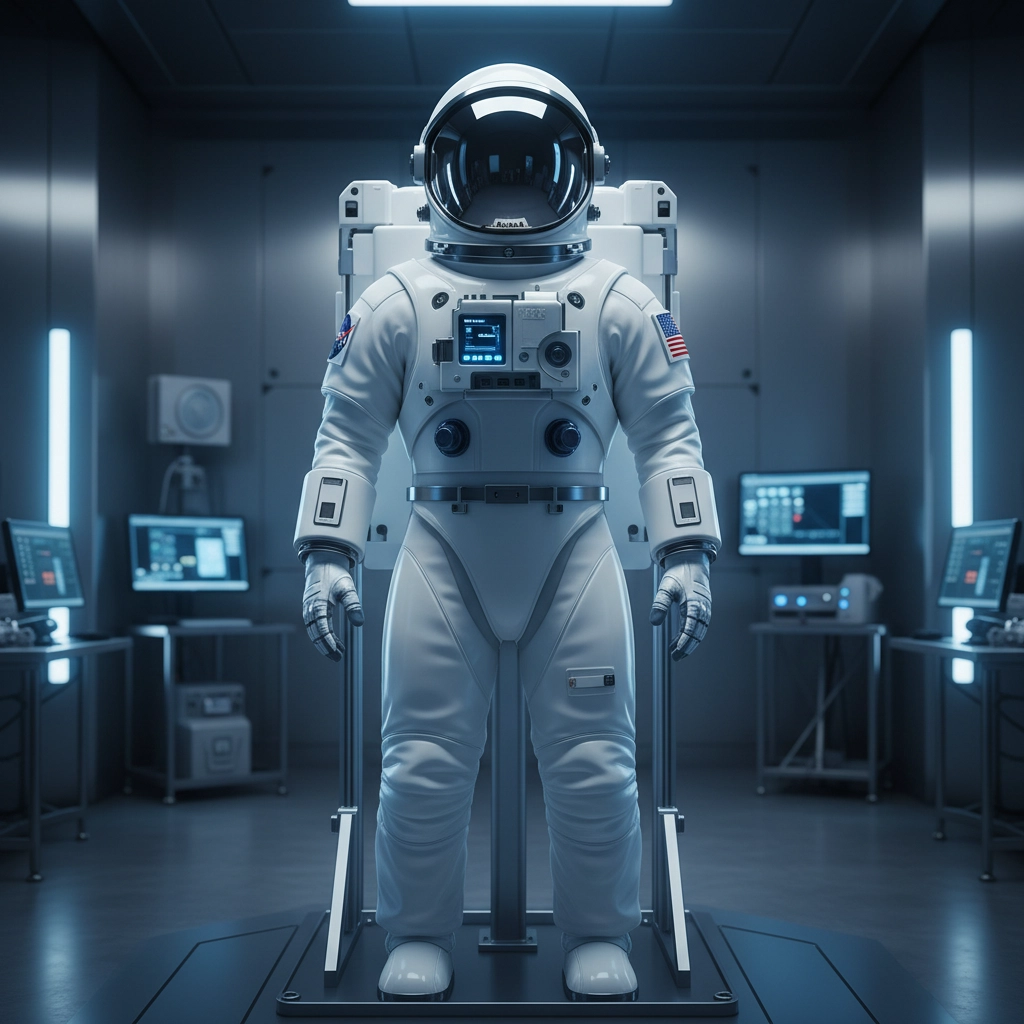
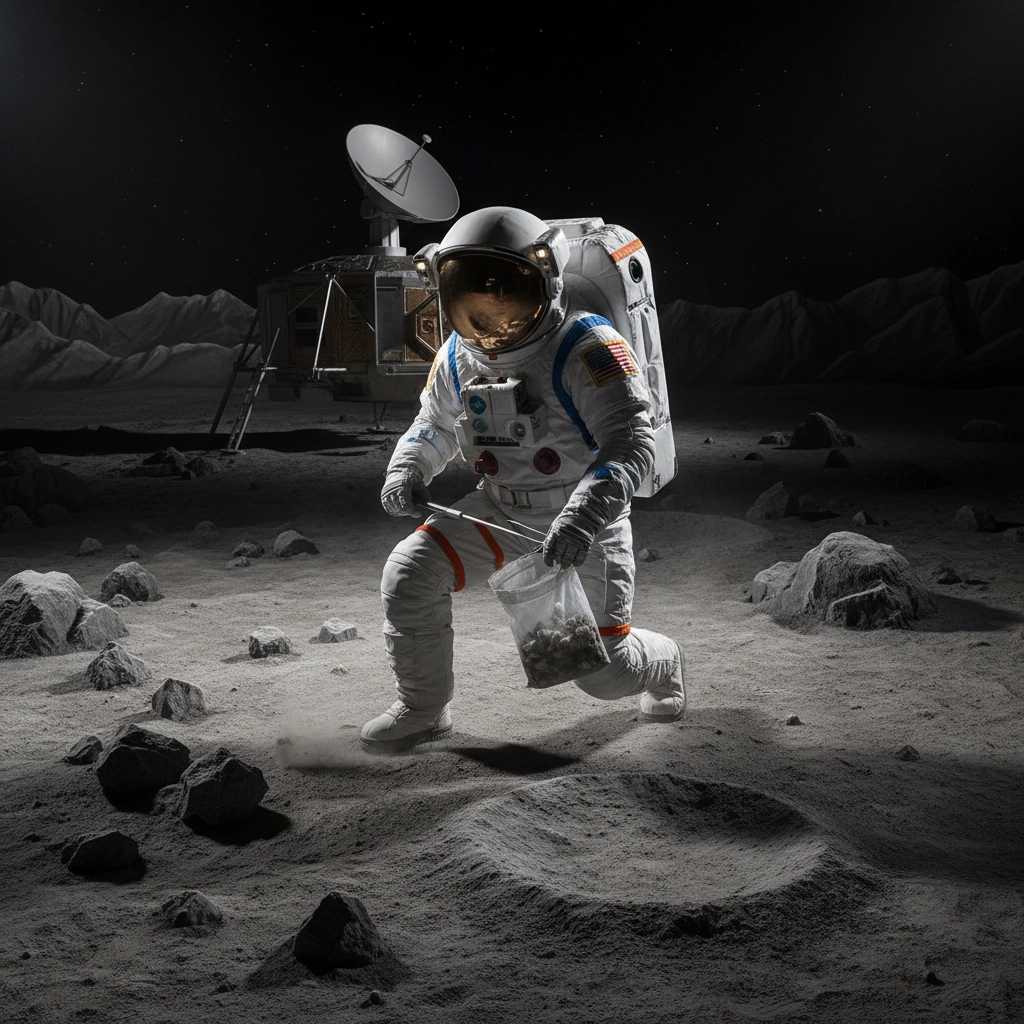
The AxEMU moonsuit aims to support scientific work on the lunar surface. Therefore, engineers must consider both protection and mobility. A crew member needs to kneel, collect samples and return safely to the lander.
Prada contributes materials and design expertise to the project. Nevertheless, this remains specialised aerospace equipment. Its requirements come from mission tasks and the harsh lunar environment.
Taking the Plunge in Houston
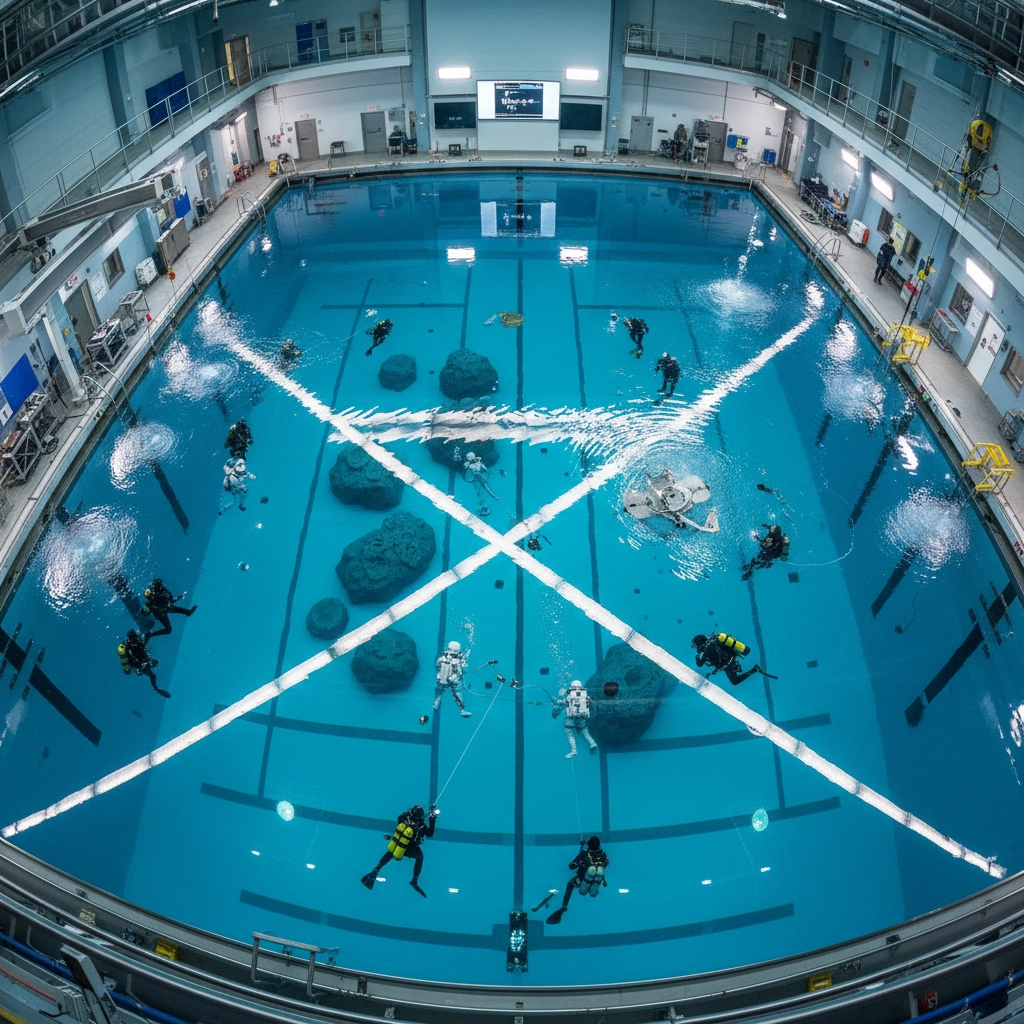
The Neutral Buoyancy Laboratory offers a controlled setting for practice. Teams adjust buoyancy and use simulated terrain to study particular movements. However, water cannot reproduce every aspect of lunar gravity, dust or temperature.
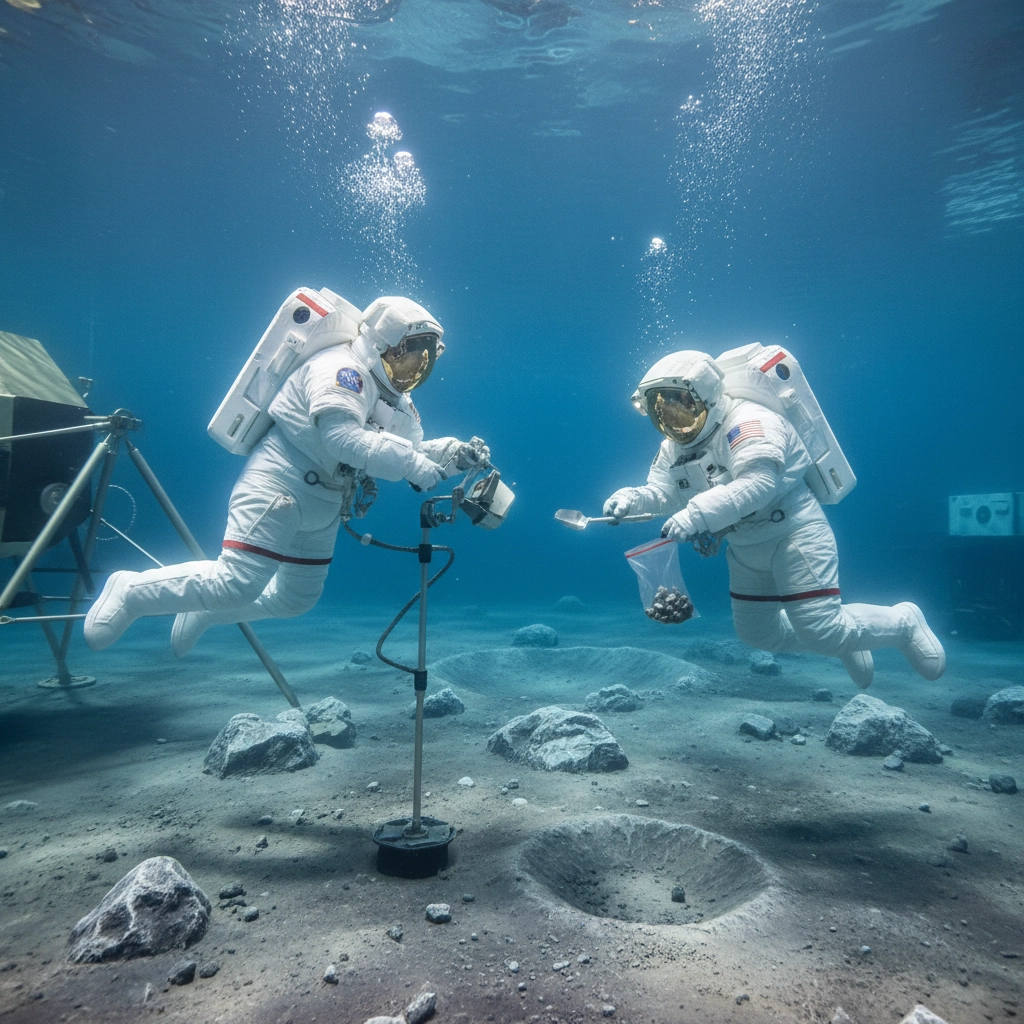
Testing the AxEMU moonsuit alongside a second unit allows engineers to examine teamwork. For example, astronauts can practise passing equipment and coordinating tasks. Support teams can then assess procedures and identify awkward movements.
Axiom reported an earlier crewed pool test with Koichi Wakata in May 2025. Read Axiom’s account of the first underwater trial. Together, these tests provide feedback for continued development.
Protection, Movement and Life Support
A lunar suit must provide oxygen and manage carbon dioxide. It must also control heat and protect the person inside. Consequently, engineers assess the equipment as an integrated system.
The AxEMU moonsuit also needs gloves that support useful work. Collecting a rock sample sounds simple on Earth. In contrast, pressure, bulky layers and limited movement can make the same task difficult in a spacesuit.
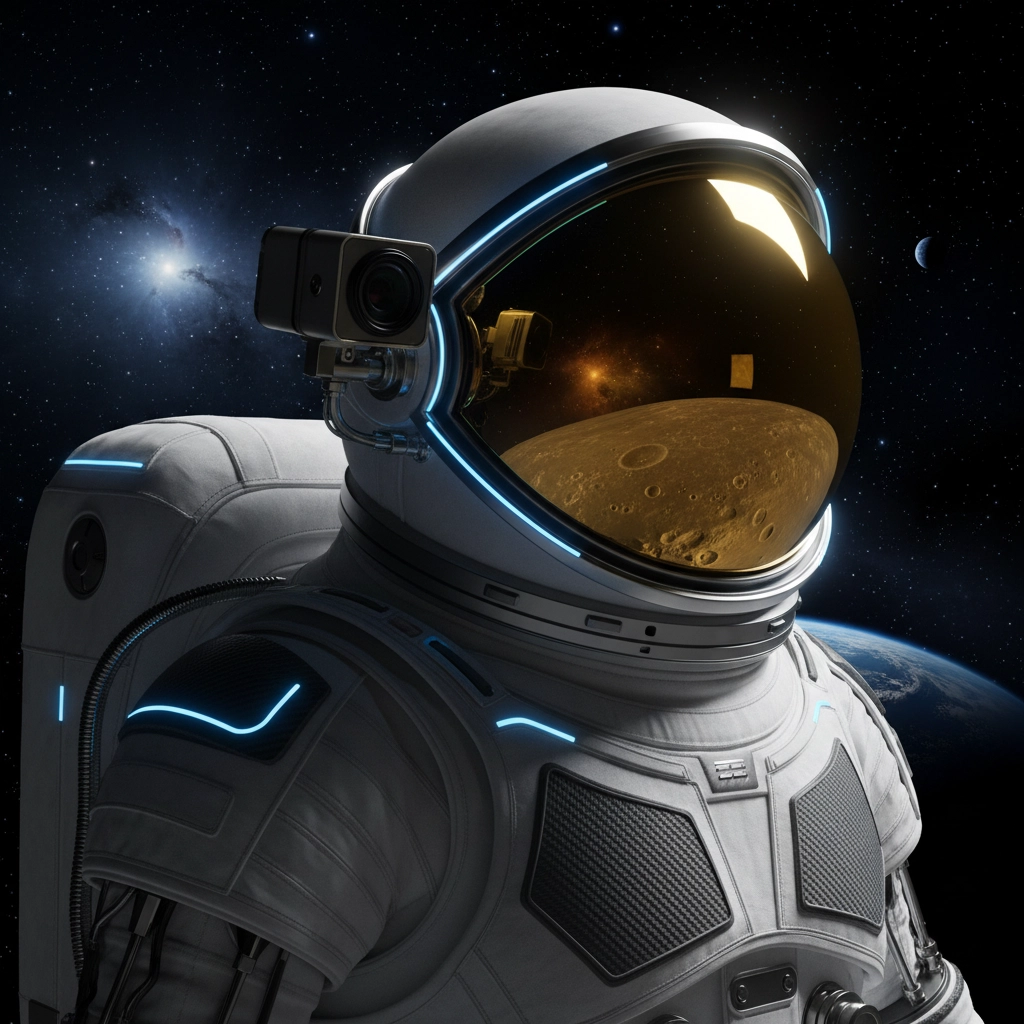
Helmet visibility matters too. Lights, cameras and protective visors can help astronauts see their surroundings and document work. However, designers must balance these features with weight, power and reliability.
Why AxEMU Moonsuit Testing Matters
Underwater trials help teams find problems while support is close at hand. For example, a tool may be difficult to reach. A procedure may also need clearer communication between crew members.
Therefore, each trial produces information rather than a promise of flawless performance. Engineers review the results and refine the design. Additional checks must assess conditions that a pool cannot reproduce.
Thermal and vacuum tests examine different stresses. Integration work also checks how equipment fits with other mission systems. Together, these activities build evidence for later reviews and approval.
What This Means for Future Travellers
The AxEMU moonsuit is a development programme for astronauts. It is not a ticket to a lunar holiday. Nevertheless, experience from government missions could inform future commercial exploration.
Better tools and procedures may benefit later crews. However, private passenger missions would still need suitable spacecraft, training and approvals. A successful suit test cannot establish a launch date or a tourism price.
For space enthusiasts, the project offers a fascinating view of practical engineering. Progress comes through repeated checks and careful analysis. As a result, the next giant leap depends on many small steps on Earth.
Explore the work of major space agencies or the costs of space travel with RocketBreaks. Meanwhile, keep watching the testing milestones that bring lunar exploration closer.