
Space Tourism in 2027: Is This the Year It Takes Off?
Space tourism in 2027 could finally move from ambitious promises towards genuine commercial activity.
For years, commercial space tourism has appeared to be just around the corner. Operators have repeatedly moved launch dates. Spacecraft have taken longer to develop than expected. Several ambitious companies have also struggled to turn impressive concepts into regular passenger flights.
However, three recent developments suggest that 2027 could become an important year for the industry.
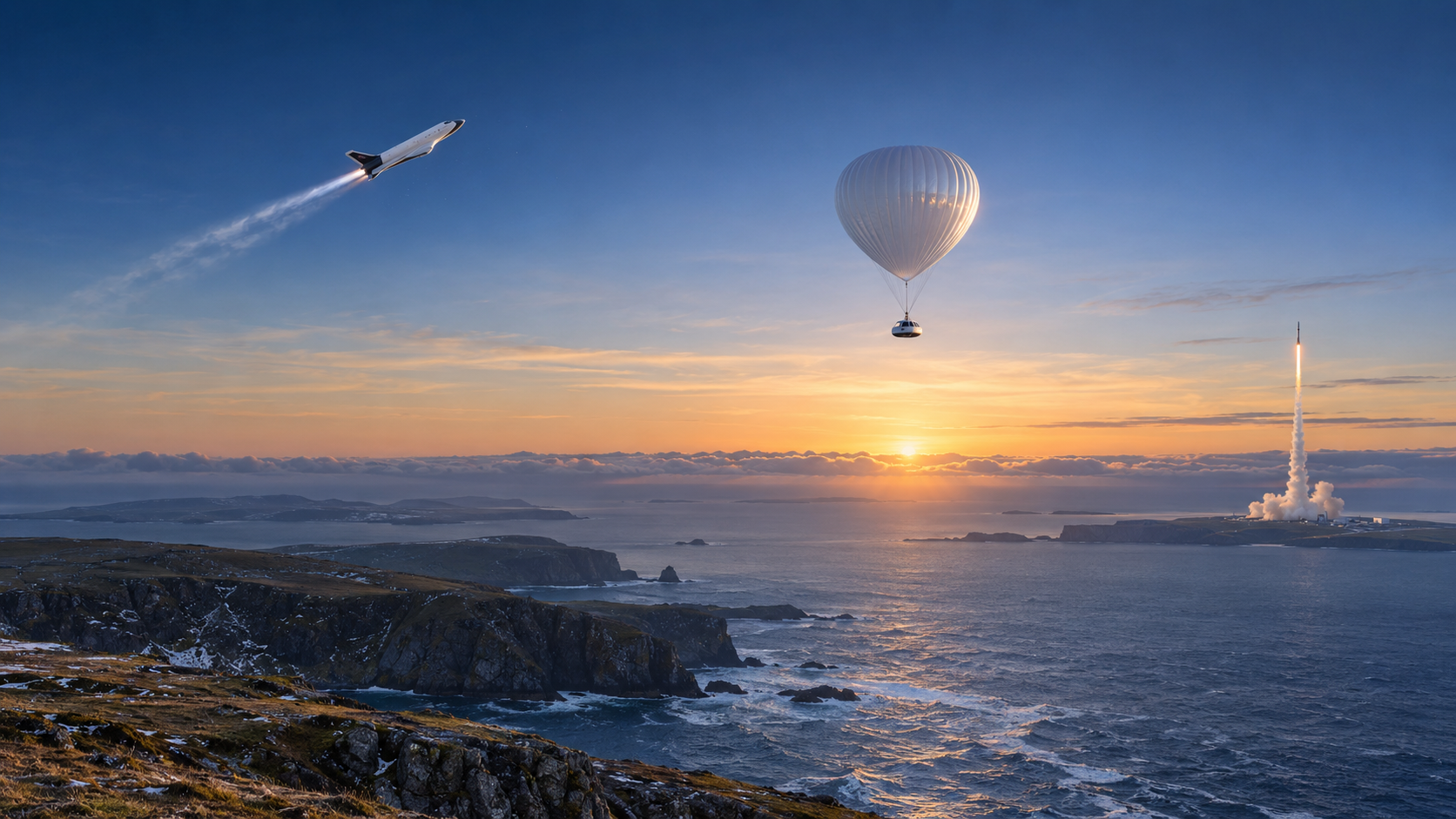
Virgin Galactic is targeting the return of commercial passenger flights. French stratospheric-balloon company Zephalto is preparing for its first public journeys. In the UK, a newly licensed launch operator is working towards a flight from SaxaVord Spaceport in Shetland.
None of these dates is guaranteed. Together, though, they point to a market moving from concept and testing towards real commercial activity.
Virgin Galactic targets a February 2027 return
Virgin Galactic has moved the planned commercial debut of its first Delta-class spaceship to February 2027. The company says it needs extra time to complete avionics and systems installation work. Flight testing must then take place before passenger services resume.
Demand appears strong. Passengers quickly bought out the previous allocation, which cost $750,000 per seat. The company said those bookings represented more than $50 million in expected future spaceflight revenue.
Virgin Galactic plans to offer another allocation at a higher price. Its live website says that current spaceflight expeditions are fully booked. It also invites prospective customers to register for the autumn 2026 booking release.
That distinction matters. Demand is clearly strong, but the company has not published the next seat price, deposit structure or cancellation policy. Interested customers should register early. They should not rely on the retired $750,000 price.
February 2027 remains a development target rather than a guaranteed passenger departure. The Delta spacecraft must complete its installation work and flight-test programme before commercial operations can begin.
Zephalto prepares for its first public stratospheric flights
Zephalto offers a very different experience. Its Céleste capsule will rise beneath a balloon to approximately 25 kilometres above Earth. Unlike a rocket-powered journey, the flight will not include several minutes of weightlessness.
The planned experience will last around six hours. It will give four passengers an extended view of Earth’s curvature and the darkness above the atmosphere.
In April 2026, Zephalto unveiled Altaïr, its first commercial stratospheric capsule. The company then announced a flight-testing campaign. Its roadmap now places the first public flights in 2027, while published sales terms list a price of €180,000 per passenger.
Some of Zephalto’s public information still conflicts. Its roadmap points to public flights in 2027, while parts of the website continue to mention travel in 2026. Prospective passengers should therefore regard 2027 as an operator target, not a confirmed departure date.
The experience still matters commercially. Balloon journeys may appeal to customers who want an extraordinary view of Earth without the physical forces of rocket-powered spaceflight. They also require less training and cost considerably less.
A licensed launch operator brings UK launch tourism closer
The third development does not involve carrying tourists. Even so, it could create an entirely new type of space experience in the UK.
HyImpulse has received a UK launch-operator licence from the Civil Aviation Authority. The company now works with the regulator and SaxaVord Spaceport on the remaining operational preparations. It currently targets spring 2027 for the first European flight of its SR75 suborbital rocket.
For RocketBreaks, the attraction is launch tourism. Visitors could travel to Shetland and witness a genuine rocket launch from British soil.
SaxaVord says safety rules and licensing requirements will control viewing opportunities. The spaceport plans to give local residents priority for initial test launches. It has not yet published a dependable launch calendar or confirmed an allocation of visitor tickets.
RocketBreaks should not sell fixed launch-viewing packages yet. Nevertheless, the licence makes SaxaVord a much more credible future destination. Premium packages could combine launch viewing, accommodation, local experiences and the dramatic landscape of the Shetland Islands.
So, will space tourism finally take off in 2027?
Possibly — but view 2027 as a pivotal target year rather than a promise.
Virgin Galactic must complete testing of its new spacecraft. Zephalto must validate its commercial capsule and operational systems. HyImpulse and SaxaVord still need to complete their final launch preparations. Weather and regulatory requirements could move the dates again.
What has changed is the quality of the evidence. We now see more than attractive renderings and distant ambitions. Companies have sold passenger bookings, built physical vehicles, published commercial terms and secured regulatory licences.
Prospective space travellers can feel excited about that progress. They still need careful advice. Prices, deposits, refund rights, flight windows and operator readiness vary enormously.
Customers should never treat a headline launch date as a confirmed booking. They should wait until the operator completes its testing and provides clear contractual protection.
RocketBreaks continues to monitor commercial spaceflight, stratospheric balloon journeys and launch-viewing opportunities. Contact the RocketBreaks team to discuss the experiences or register your interest in future availability.